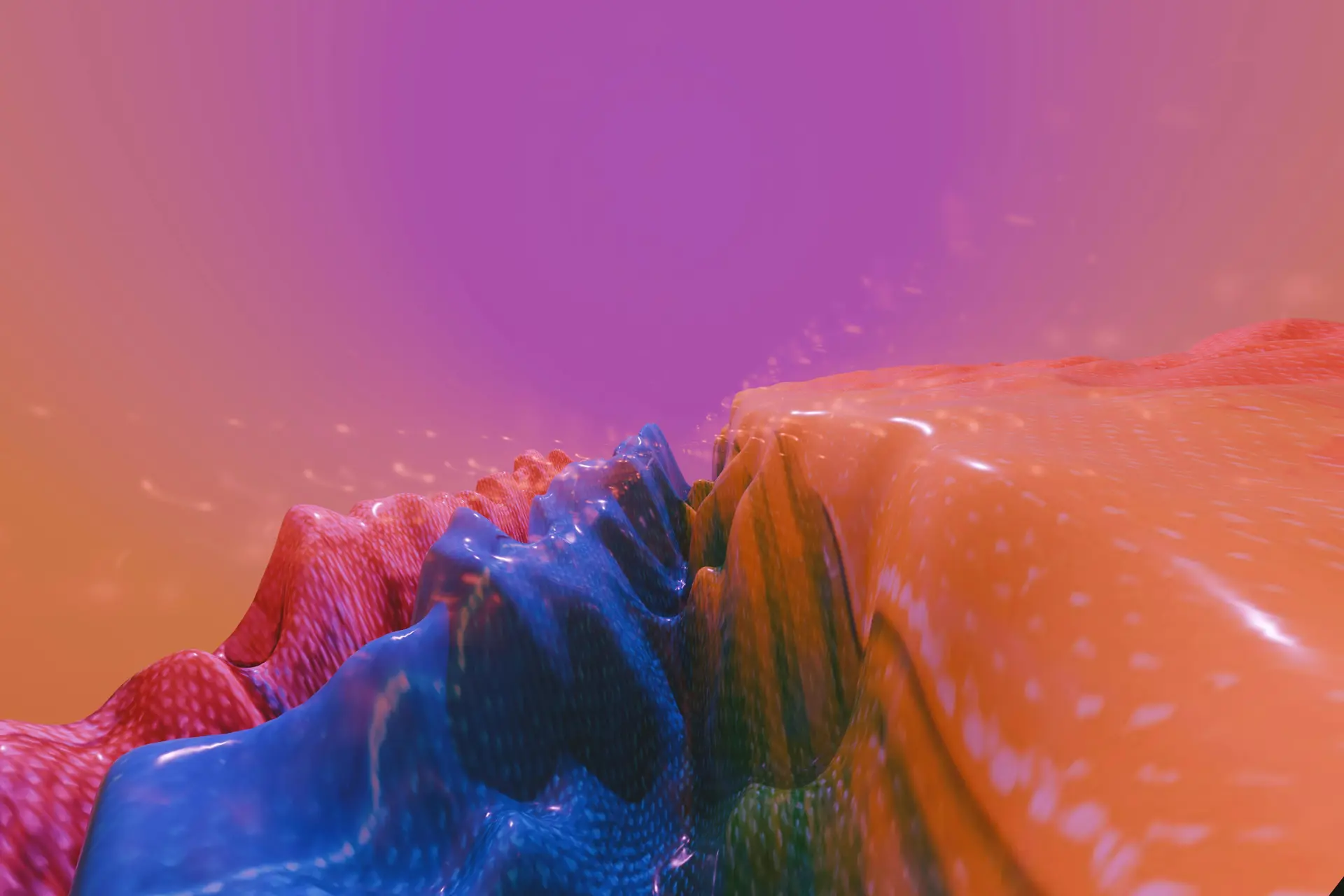
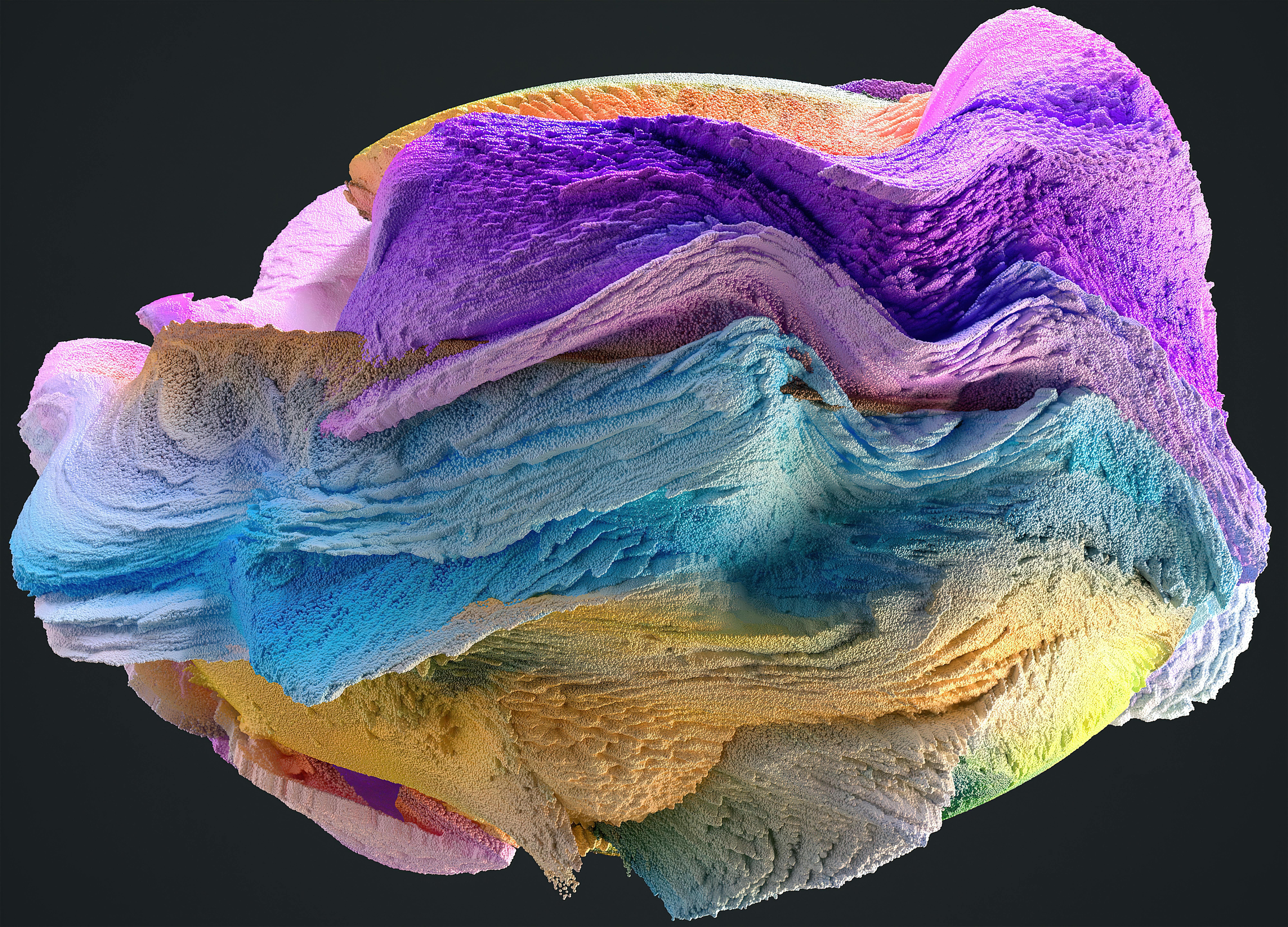
The gap between a website and an experience has never been wider — or more commercially significant. While most of the web still ships flat pages with hover states and hero images, a growing tier of agencies is delivering WebGL-powered environments that feel closer to an interactive film than a marketing site.
The tools making this possible — Three.js, GSAP, Lenis, and custom GLSL shaders — have matured dramatically. The barrier is no longer the technology. It's the knowledge, the craft, and the creative ambition to use them at full power. Here's the full picture of what's happening and why agencies are treating immersive web as their sharpest competitive edge.
The Commercial Case for Immersive Web
Award-winning immersive sites aren't just vanity projects. The data behind them tells a different story: longer average session times, dramatically lower bounce rates, and — most importantly — higher-value client acquisition. When a prospect lands on a site that responds to their scroll like a living object, they assume the business behind it is at a different level. They're usually right.
For agencies specifically, immersive portfolio work has become the single most effective form of business development. Sites featured on Awwwards and FWA generate inbound leads that no paid campaign can replicate. One well-executed immersive site is worth more than a year of LinkedIn content.
"Clients don't always know what they want until they see it. The moment you show them a WebGL prototype with real scroll physics and shader transitions, the conversation shifts entirely. Budget conversations get much easier."
— Creative Director, award-winning digital agency
The Core Stack: Three.js + GSAP + Lenis
If you strip back every Awwwards Site of the Year from the past three years, the same technical foundation appears with remarkable consistency. It's not magic — it's a deliberately chosen stack that prioritises control, performance, and creative range.

Three.js — The 3D Engine
Three.js abstracts WebGL's raw complexity while giving developers full access to the GPU pipeline when they need it. From floating mesh environments and particle field systems to refraction spheres and fluid simulations, Three.js is the canvas on which immersive web is painted. The key discipline: memory management. Every geometry, material, and texture must be explicitly disposed of to prevent GPU memory leaks — a detail that separates production-grade work from fragile demos.
GSAP — The Animation Engine
GSAP (GreenSock Animation Platform) is the non-negotiable animation layer for any serious immersive build. Its ScrollTrigger plugin handles the complex relationship between scroll position and 3D state — pinning sections, scrubbing timelines, and driving shader uniforms in real time. Its gsap.context() scoping system makes complex multi-section animations manageable and reversible. No other JavaScript animation library comes close to its performance or precision.
Lenis — Smooth Scroll Physics
Lenis provides the buttery lerp scroll that separates a "nice website" from a "this feels alive" website. By replacing native browser scroll with a physics-based interpolation (typically 0.08 lerp factor), every Three.js object and GSAP timeline gains a sense of weight and momentum. Paired with GSAP's ticker for RAF synchronisation, Lenis ensures scroll-driven WebGL animations run at a locked 60fps even on complex scenes.
GLSL Shaders: The Secret Ingredient

If Three.js is the engine and GSAP is the choreographer, GLSL shaders are the soul. Custom shaders written directly in OpenGL Shading Language run entirely on the GPU, which means they can produce visual effects at a scale and speed that JavaScript simply cannot match.
The shader effects currently dominating award-winning sites include:
- Noise displacement — organic, breathing surface animation driven by Perlin or Simplex noise functions. Used extensively on hero geometry to create the sense of a living material.
- Liquid / refraction distortion — simulates light bending through glass or liquid. Creates the "glass morphism done right" effect seen on sites like fluid.glass.
- Chromatic aberration — splits RGB channels to simulate lens distortion on scroll or mouse movement. High-impact, low-cost GPU effect.
- Particle dissolution — breaks geometry into thousands of GPU-simulated particles that reassemble or dissolve on scroll. The scroll mechanic behind many Awwwards Product of the Year submissions.
- Unreal Bloom (post-processing) — adds physically-based light bloom to any bright surface in the scene. Makes dark-mode product pages feel cinematic.
The 5-Act Scroll Story: How Award Sites Are Structured

The best immersive agency sites aren't designed as pages. They're designed as scroll narratives — stories with a beginning, escalating tension, a reveal, an emotional peak, and a resolution. This structure is now so consistent among award-winning work that it's effectively become a template:
- Act 1 — Hook (0–15% scroll): Cinematic hero. Three.js scene is active. WebGL is running. The copy is minimal and confident. The visitor understands immediately that this is different.
- Act 2 — Reveal (15–40%): The scroll mechanic begins. An object assembles, a shader warps, a particle system forms. GSAP ScrollTrigger is driving everything. The user feels in control of the experience.
- Act 3 — Detail (40–65%): Key features are highlighted as the 3D object reaches its fully revealed state. Text animates in. The shader is at mid-intensity. Specifics are communicated through kinetic typography.
- Act 4 — Emotion (65–85%): The scene reaches its peak. Bloom is active. The shader is running at full intensity. The copy is aspirational. This is where the emotional connection locks in.
- Act 5 — Resolution (85–100%): The scene settles. The CTA appears. The product or service is presented in its most confident form. Conversion happens here.
Performance Without Compromise
The most common objection to WebGL in production: "it'll kill mobile performance." This is a legitimate concern — and one that well-engineered immersive sites solve cleanly. The standard approach: detect device capability on load and render a CSS-based fallback below 768px. The fallback can still be visually stunning — parallax images, CSS-only keyframe animations, and strong typography carry the experience on mobile without a single WebGL call.
Desktop performance best practices:
- Cap device pixel ratio at 2 — rendering at 3× provides no visible quality gain on any display
- Disable shadow maps — they're expensive and rarely visible on dark-mode sites
- Use instanced meshes for any geometry repeated more than 10 times
- Dispose every geometry and material in a destroy() method — GPU memory doesn't garbage-collect itself
- Drive the render loop via GSAP ticker, not a standalone requestAnimationFrame — this keeps everything synchronised and avoids dropped frames
Reference Sites Every Agency Should Study
- madeinevolve.com — the benchmark for immersive scroll narrative, pinned sections, and editorial typography interacting with 3D.
- fluid.glass — the definitive study in liquid WebGL, refraction shaders, and buttery lerp scroll. Every frame is Awwwards-worthy.
- Awwwards SOTM archives — reviewing the last 24 months of Site of the Month winners reveals exactly what juries respond to and what techniques are reaching maturity vs. oversaturation.
The window for immersive web as a differentiator is open — but it won't stay open forever. As more agencies build the capability, the baseline will rise. The agencies investing now in Three.js expertise, custom shader development, and scroll storytelling craft are building a moat that's extraordinarily difficult to copy quickly. The question is whether you build it before or after your competition does.