There's a phrase spreading fast across dev Slack channels, agency standups, and conference hallways: "vibe coding." Coined in early 2024 and turbocharged through 2025, it describes the shift from writing code line-by-line to directing an AI that writes most of it for you — while you focus on the outcome, the architecture, and the experience.
For agencies, this isn't a productivity trick. It's a fundamental restructuring of how digital products are scoped, staffed, and shipped. Here's what's actually happening — and what it means for your team.
What Is Vibe Coding, Really?
Vibe coding isn't about removing skill from the equation. It's about elevating which skills matter. Instead of spending three hours wiring up a REST endpoint and its validation logic, a senior developer describes the intent, reviews the AI output, corrects the edge cases, and ships in 25 minutes. The "vibe" — the aesthetic, the architectural decision, the UX instinct — is still entirely human.
What AI handles: boilerplate, repetitive CRUD, test scaffolding, CSS property lookups, package configuration, and first-pass component structure. What humans still own: system design, performance trade-offs, creative direction, and the judgment calls that make or break a product.
"The best engineers using AI tools aren't writing less — they're thinking bigger. They're solving problems that would have required a full team six months ago."
— Common sentiment across engineering leads at top-tier digital agencies, 2025
The Tools Leading the Shift
Not all AI dev tools are created equal. Agencies are converging on a shortlist that actually survives contact with production-grade projects.

🟣 Cursor AI — The IDE That Thinks With You
Cursor is VS Code rebuilt around an AI core. It doesn't just autocomplete — it understands your entire codebase, rewrites multi-file logic on command, and answers questions about your own project with surprising accuracy. For agencies, it's become the daily driver for mid-to-senior engineers. Its "Composer" mode can scaffold entire features from a single natural-language brief.
⚡ v0 by Vercel — UI Generation at Spec Quality
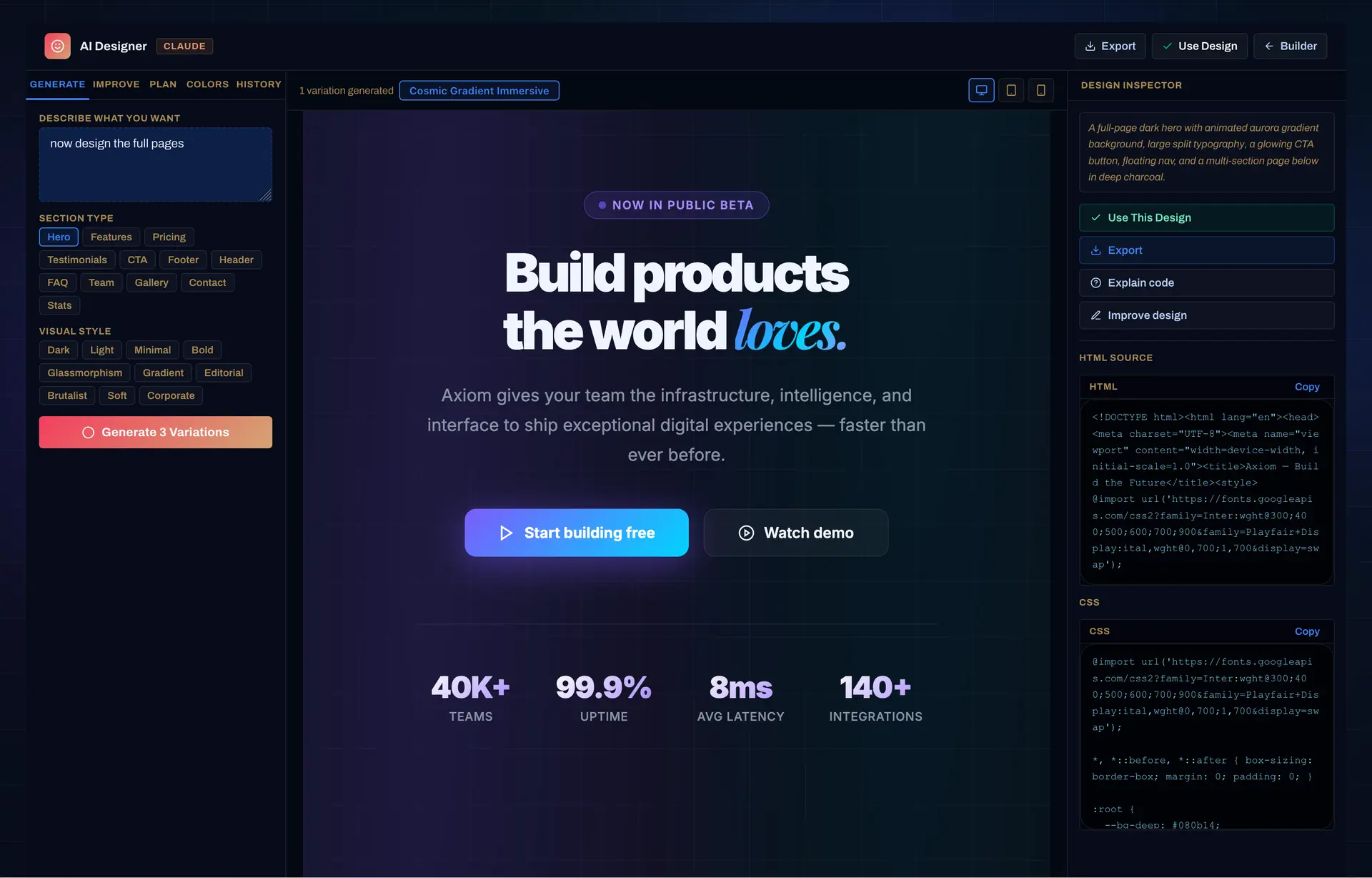
v0 turns a text prompt or a Figma screenshot into production-ready React + Tailwind UI in seconds. Agencies are using it to blast through design-to-code handoff — what used to take a junior dev two days now takes a designer two hours. The output isn't always perfect, but it's always a strong foundation that senior engineers can harden.
🔥 Bolt.new — Full-Stack in the Browser
Bolt.new is where the lines blur completely. It generates, runs, and deploys full-stack applications — including backend logic, database schemas, and authentication — directly in a browser tab. For client demos and rapid prototyping, agencies are using it to arrive at pitch meetings with a working app instead of mockups.
🤖 GitHub Copilot Workspace
GitHub's answer to Cursor goes beyond the editor — it lets you describe an issue, get a full implementation plan, and execute it as a pull request. For agencies managing multiple client repos, this is particularly powerful for routine maintenance, dependency upgrades, and bug resolution.
How Agencies Are Restructuring Around AI
The agencies adapting fastest aren't the ones hiring the most AI engineers. They're the ones who have rethought their process around AI-native tooling. Here's what that looks like in practice:
- Smaller, higher-output teams. A three-person team with AI tooling is now competitive with a six-person traditional team on many mid-market projects. Agencies are adjusting headcount expectations accordingly — but elevating the seniority bar.
- Prototype-first pitching. Clients no longer want to see slide decks. Agencies showing up with a working Bolt.new prototype or a v0-generated UI are winning more pitches, faster.
- AI for the long tail. QA scripts, accessibility audits, content migration, SEO tag generation — all the work that used to eat junior hours is now handled with AI pipelines. Junior developers are being repositioned as AI-output reviewers and integration engineers.
- Agentic CMS workflows. Forward-thinking agencies are building AI agents directly into their CMS platforms — automating content scheduling, SEO auditing, image alt text generation, and even basic copywriting at scale.
The Real Risks Agencies Aren't Talking About Enough
Vibe coding has a shadow side that agencies need to manage deliberately. Over-reliance on AI output without deep code review creates technical debt that compounds silently. AI tools are optimised for the common case — they struggle with nuanced performance constraints, complex state management, and security edge cases that require real expertise to spot.
The agencies winning long-term are those treating AI as a highly productive junior developer that needs close mentorship — not an autonomous engineer. The senior review step is not optional. If it gets cut in the name of speed, the debt will surface in production at the worst possible time.
What to Do Right Now

If your agency hasn't started building AI into your development workflow yet, here's a practical starting point:
- Pilot Cursor on one active project — give it two sprints and measure velocity honestly.
- Replace your next pitch mockup with a Bolt.new prototype — the client reaction alone will justify the experiment.
- Assign one senior engineer as your AI Review Lead — their job is to define what AI can and can't touch, and to audit output before merge.
- Map the tasks eating your most junior hours — those are your first AI automation targets.
- Stay close to MCP — Anthropic's Model Context Protocol is becoming the standard for connecting AI to your existing tools. Getting familiar now puts you a year ahead of most agencies.
Vibe coding isn't the end of agency development — it's the beginning of a much higher ceiling. The question isn't whether to adopt it. It's how fast you can build the judgment to use it well.